Milwaukee Oral Surgery & Implants, Ltd.

Immunotherapy and Oral Cancer

'woman thinking about oral cancer'

You may have heard: Immunotherapy is proving to be very promising in the treatment of a variety of cancers, in particular lung cancer and advanced melanoma. However, immunotherapy has not found its way (yet!) into the treatment regimen for head and neck cancers.

What is immunotherapy?

Immunotherapy is the process of enlisting the patient’s own immune system in the fight against cancer cells. Several drugs have been used successfully to aid in the treatment of advanced lung cancers and melanoma, giving patients a longer prognosis in many cases.

Cancer Cells are Tricky

Cancer cells are notoriously sneaky – their ability to hide from immune cells is one of the reasons that cancer is so hard to treat. This is where “checkpoint inhibitors”, one of the most common classes of immunotherapy drugs in cancer treatment, come in. These drugs help to block the activation of proteins that help cancer cells hide from immune cells.

The Connection with Oral Cancer

Recurring head and neck cancers are very difficult to treat. Often they are resistant to the best chemotherapy drugs, so the hope has always been that immunotherapy drugs may some day step in to assist with the oral pathology fight. A recent trial in the UK has shown that the day may be coming sooner than we thought! The trial proved successful in extending prognosis for many of the patients.

Reduced Side Effects

The research also noted that side effects were reduced to give patients a better quality of life during treatment.

More Testing Needed

While more research is needed before the drugs receive FDA approval for the treatment of oral cancer, the good news is that because these drugs are already approved and on the market for other cancers, the application process for use in oral cancers will be quicker (and smoother) than it would be for a new drug.

At Milwaukee Oral Surgery & Implants, Ltd, our commitment to your care, comfort, health and safety is evident from the minute you walk through our door. Call us at Wauwatosa-Milwaukee Office Phone Number 414-257-1161 for more information about oral cancer.


Why do we have wisdom teeth, anyway?

'woman thinking about wisdom teeth'

Wisdom teeth were once an extremely valuable asset to our ancestors. When a typical diet consisted of chewy plants and uncooked meat, third molars (wisdom teeth), which fit easily into our ancestors’ larger jaws, were absolutely necessary. Wisdom teeth were the evolutionary answer to the need for chewing power to combat excessive wear.

Today, our diets are not as rough as those of our ancestors. With modern marvels like forks, spoons, and knives, as well as softer food, the need for wisdom teeth is virtually nonexistent. And yet, on average, about 65% of the human population is born with wisdom teeth which usually erupt between the ages 17 and 25.

Although wisdom teeth were incredibly advantageous for our ancestors, they pose a bit of a problem for the modern mouth. Humans have evolved to have smaller jaws, and so wisdom teeth are often either too big for the jaw or the jaws themselves are just too small. Either way, third molars crowd the mouth. Because of this lack of space, molars often grow sideways, only partially emerging from the gums, or actually get trapped inside the gums and jawbone.

These impacted wisdom teeth can be chronically contaminated with bacteria associated with infection, tooth decay, inflammation, and gum disease. And because they’re so far back in the mouth or trapped underneath gums, it’s difficult and sometimes impossible to keep them clean. Even when wisdom teeth come in fully, they are so far back in the mouth that it’s just too easy for food to get trapped, leading to plaque, cavities, and gum disease.

Although wisdom teeth were very important to our ancestors, nowadays, they pose a serious problem to oral health. Call Milwaukee Oral Surgery & Implants, Ltd to find out if your wisdom teeth are ready to come out!


How Are Wisdom Teeth Removed

'wisdom tooth sculpture'Don’t be worried about your wisdom tooth extraction, let us outline the whole process for you:

Treatment Development


During late adolescence, wisdom teeth start to appear and occasionally are accompanied by oral pain, as well as an increased risk of dental issues such as pericoronitis, gum disease, and tooth decay. Through evaluation, your oral surgeon will determine the number of wisdom teeth present, as well as how they are developing in relation to the rest of your teeth. Using advanced imaging technology, an oral surgeon will discover if the teeth are partially or fully impacted, and then will create a strategic treatment plan in order to remove the teeth and ensure successful recovery.

Preparation


Although sedation is not always necessary, many patients have found anesthesia to be helpful in relaxation and reducing pain during the procedure. If sedation is chosen, there are certain preparations that must be made: patients must enlist the help of family or friends to bring them back home after their surgery.

The Procedure


Local anesthesia is applied to the area. Then, a surgical tool is used to reveal the bone and tooth. After the tooth is clearly visible, it is removed. Once the tooth is extracted, the gums and bone are left to heal.

Healing


Following the procedure, there may be some swelling in the tissue and cheeks near the treatment site. To promote a successful recovery, patients should avoid strenuous activity, smoking, and eating hard foods. Patients should not touch the treatment area with their tongue, or use straws, as this could potentially dislodge the developing blood clots and expose the area to food and bacteria.

Wisdom tooth extraction can be an uncomplicated procedure that ultimately will protect your long-term oral health. For more information about wisdom tooth extraction, schedule your consultation at Milwaukee Oral Surgery & Implants, Ltd today!


Little Medium Big Bone Grafts

Bone grafting is a straightf'tooth surrounded by bone'orward procedure that is immensely beneficial for numerous reasons. In the instance of a missing tooth (or teeth), the jaw bone can begin to slowly degrade. The jaw bone is holds teeth in place, and once a tooth is no longer present, the bone doesn’t have anything to support. There are different types of bone grafts, and depending on your situation. Outlined below are several different types of bone grafts:

Little Bone Graft

In the case of a simple, single lost tooth, the ideal course of action is to not lose excess bone. In this process, sterile, demineralized human bone granules are packed into the tooth socket immediately after tooth extraction. This procedure is very simple, and does not add anything to your recovery time. Over the next several weeks, your own bone will fill the tooth socket and preserve the bone height enough for you to have the area restored.

Medium Bone Grafts

If a tooth was removed a long time ago, there is likely to already be some bone loss impeding the restoration of the area. In this case, the area of the missing tooth is opened with a small incision, the bone surface is prepared, and demineralized bone graft granules are used to build up the area. Many surgeons prefer to use a little bit of the patient’s own bone in this procedure in order to ensure the best results possible. If your own bone is used, your surgeon will take it from another area of the jaw bone, usually near the wisdom tooth area, shaving off tiny granules and combining them with the demineralized bone. The bone graft will heal and integrate with the surrounding bone tissue. This type of graft can be used for one or multiple areas of missing teeth.

Big Bone Graft

Patients who have many missing teeth and who have been missing many teeth for many years, have often experienced advanced bone loss. In those who wear dentures, the lower jaw bone often recedes so severely that they can no longer wear them. Extensive bone grafting is necessary in order to consider restorative methods. A combination of demineralized, sterile human bone and the patient’s own bone is used to restore the jaw bone, creating enough width and height to consider dental implants. The patient’s bone is supplied by another part of the jaw, hip, or tibia. Bone granules are also used to enhance and strengthen the graft.

Bone grafting is a surgical procedure that takes time. However, it plays an essential role in making new teeth possible, and will ultimately be a positive process! For more information, call 414-257-1161 today for a consultation with Milwaukee Oral Surgery & Implants, Ltd


Dental Implant Recovery

Dental implants, titanium po'dental implant'sts that are placed within your jawbone, are an excellent option for restoring missing teeth. The process of getting dental implants typically takes a few appointments over the span of several months, and since the strength of dental implants comes from their fusion with the jawbone, proper healing from this surgery is absolutely essential. Here are some tips for a speedy and well-healed recovery!

Prepare

One of the best ways to promote a speedy recovery is to properly prepare for dental implant placement. Get ready for your procedure by:
● Getting plenty of sleep
● Avoiding smoking or drinking excessively
● Maintain your oral health! Brush twice a day and floss once a day!
● Arrange for someone to drive you to and from your procedure
● Plan to take some time off work so you can really focus on resting and recovering
● Pick up post-surgical prescriptions, gauze, cold compresses, and any other supplies
● Ask for a recovery timeline

Getting ready before your dental implant surgery can make a huge difference in the recovery afterwards!

Recovery Time Factors

Recovery time for the dental implants procedure depends on several factors. While each patient’s case is slightly different, these following factors are the main contributors to healing time:
● The number of implants: Having a single implant may take less recovery time than multiple implant placement.
● Whether or not you require preparatory procedures such as bone grafting
● Your oral and overall health: the healthier you are, the easier it will be for you to heal quickly.

Your oral surgeon will explain your unique estimated recovery time based on these and other factors at your initial consultation.

After Your Surgery

After the procedure, the healing process can be sped up through:
● Biting down on gauze to staunch the bleeding
● Avoiding any activity that could put pressure on your mouth
● Taking proper prescribed medication
● Eating soft foods and avoiding chewing near the treatment area
● Rinsing your mouth with warm saltwater between meals
● Using a cold compress to reduce swelling
● Gently retaining oral health routines like brushing and flossing

Following these guidelines, you will be able to heal comfortably and successfully!
To learn more about this treatment, or schedule a consultation, call 414-257-1161 and come see us at Milwaukee Oral Surgery & Implants, Ltd today!


Wisdom Tooth Removal – Aftercare

'woman smiling after wisdom tooth removal'Having your impacted wisdom teeth removed is a serious surgical procedure, and post-operative care is extremely important! Read on for instructions on how to care for your sore mouth, and how to minimize unnecessary pain and complications.

Immediately Following Surgery

Keep a firm, yet gentle, bite on the gauze packs that have been placed in your mouth to keep them in place. You can remove them after an hour if the bleeding is controlled. If the surgical area continues to bleed, place new gauze for another 30 to 45 minutes.

Be careful!

Do not:
• Rinse vigorously
• Probe the area
• Smoke (hopefully you don’t!!)
• Participate in strenuous activities
You can:
• Brush gently (but not the area)
• Begin saltwater rinses 24 hours after surgery (mix 1 tbs of salt with 1 cup of water). Make sure to swish gently. These rinses should be done 2-3 times a day, especially after eating.

Enjoy some down-time!

Keep activity level to a minimum! Enjoy a day of couch or bed-rest, as being active could result in increased bleeding. Avoid exercise for 3-4 days, and when you do begin exercising again, keep in mind your caloric intake has been reduced so you may feel weaker.

Bleeding

As you’ve just had surgery, some bleeding will occur and it’s not uncommon to ooze blood for 24-48 hours after your procedure. REMEMBER-the blood you see is actually a little blood mixed with saliva, so don’t panic!
If excessive bleeding persists:
• Try repositioning the packs. They may not be putting enough pressure on the site.
• Sit upright and avoid physical activity.
• Use an ice pack and bite on gauze for one hour.
• You can also try biting on a moistened tea bag for 30 minutes (the tannic acid in tea promotes blood clotting).
• If bleeding persists, please call our office at 414-257-1161.

Pain

Unfortunately, some pain is to be expected after surgery. Try not to let the anesthetic wear off before taking your prescribed pain medication. Dr. Triggs, Dr. Smith, Dr. Midtling, Dr. Waligora, Dr. Wallock and Dr. Bertagna will have discussed a plan to manage your pain, make sure you follow these instructions.

Diet

Eat nourishing food that takes little effort.
Avoid:
• Extremely hot foods
• Straws (for the first few days)
• Chewing (until tongue sensation has returned)
• Smaller foods that can become stuck in the socket area
• Skipping meals—while eating may seem like a lot of work, you need your nourishment to be able to heal and feel better!

Day 2 and 3 Following Surgery

Swelling

Swelling is a completely normal occurrence. Keep in mind, swelling will usually be at it’s worst in the 2-3 days after surgery. You can minimize swelling by applying a cold compress (covered with a towel) firmly to the cheek next to the surgical area. Apply the pack with 20 minutes on, and 20 minutes off for the first 24-48 hours. Also make sure to take the medication prescribed by Drs. Triggs, Smith, Midtling, Waligora, Wallock and Bertagna. This helps with pain and swelling.

Keeping your mouth clean

Keeping your mouth clean is very important! Continue saltwater rinses as often as you’d like, but at least 2-3 times a day. Begin your normal oral hygiene (remember to brush softly and don’t do anything that hurts)!

Healing

Everyone heals differently, but your timeline should look similar to this:
• Day 1-2 will be the most uncomfortable and you will experience some swelling.
• Day 3 you should be more comfortable and while still swollen, you should be able to begin a more substantial diet.
• Day 4 and on you should see a gradual and steady improvement.

Other Normal Things

• Discoloration. Bruising is a normal post-operative occurrence you may notice 2-3 days after surgery.
• Stiff jaw muscles. You may find it difficult to open your mouth wide in the days following your surgery. This is normal and usually resolves itself within a week after surgery. Stretching these muscles may help to speed up recovery.
Since no two mouths are alike, do not take advice from friends (even well-intended advice could cause a healing set-back). The advice given to you from Drs. Triggs, Smith, Midtling, Waligora, Wallock and Bertagna and the Milwaukee Oral Surgery & Implants, Ltd team are tailored to fit your needs. Please call us at 414-257-1161 if you have any questions or concerns about your recovery. Happy healing!



Pediatric Facial Trauma

'child holding soccer ball'We’ve all had our share of trips, bumps, and even broken bones in our childhood years! (If you haven’t, then you’re very lucky!)
As the saying goes, children are very resilient, and this is actually due to their biology. Children have “bendy bones” which are more likely to bend and crack under pressure rather than break.
The term is referred to as greenstick fractures; similar to when a green branch of a tree bends and cracks, but doesn’t break off.

Considering how much energy children have, pediatric facial trauma is actually very rare! Of all facial trauma, only 15% is pediatric (0-18 years).

The maxillofacial region is related to a number of vital functions, such as vision, smell, eating, breathing and talking. It also plays a significant role in appearance.
When treating children’s maxillofacial injuries, we take into consideration the difference anatomically between adults and children. Facial trauma can range between minor injury to disfigurement that lasts a lifetime if not treated correctly.

Children have much more flexibility in their facial bones, as well as smaller sinuses, multiple fat pads and unerupted teeth. In adolescents an increase in risk-taking behavior and the reduction of parental supervision results in an increase in facial fractures. Contact sports, physical play, riding bicycles, and even road traffic accidents all contribute to pediatric facial trauma.

A full treatment plan is always taken into consideration when we deal with facial trauma. The age of the patient, anatomic site of the trauma, complexity of the injury and how long since the injury occurred is taken into account. Ideally, don’t put off your incident for more than 4 days! This is prime healing time, and if any longer, could extend the healing and complicate the treatment process.

This is why it is very important to always wear protective gear! Remember to always have your children wear seatbelts, and invest in booster or car seats so your children can receive the full protection of seatbelt coverage.
During play, remember shin guards, mouth guards and helmets! Especially when riding a bike!

Play it safe, and if life throws a curve ball (at your face!) give Milwaukee Oral Surgery & Implants, Ltd a call at [PRACTICE_NUMBER]


Oral Cancer and Hepatitis C

'Oral Cancer' 'Hepatitis C'The Journal of the National Cancer Institute (JNCI) recently found that individuals infected with the hepatitis C virus are two to five times more likely to develop head and neck cancers. The JNCI study found that the risk for hepatitis C patients of developing head and neck cancers more than doubled for oral cavity and oropharynx cancers, and increased nearly five times for larynx cancers. As well, patients that are hepatitis C virus-positive were also more likely to test positive for human papillomavirus (HPV).

The question remains, how does hepatitis C virus increase oral cancer risk?

The JNCI research found that patients infected with the hepatitis C virus had a higher odd ratio of having cancer of the oral cavity, oropharynx, or larynx than those without hepatitis C virus infection. Enhanced replication of hepatitis C virus in oropharyngeal tissues may in fact contribute to chronic inflammation, ultimately prompting cancer development. Human papillomavirus is known to suppress local immune response, which may accelerate the production of hepatitis C virus in oropharyngeal cells. The JNCI notes that human papillomavirus and hepatitis C virus may play a “synergistic role” in the development of oropharyngeal cancers by stimulating loss or destruction of tumor suppressor proteins p53 and retinoblastoma protein.

The JNCI notes that one of the study’s limitations is that it didn’t include individuals with hepatitis C virus who didn’t have oral cancer. All and all, it is important to take away from The Journal of the National Cancer Institute’s study that it is important to educate Hepatology (study of liver, gallbladder and pancreas health) and infectious disease specialists. These doctors who treat patients with hepatitis C virus need to understand that the hepatitis C virus not only drastically affect liver health, but it’s also a systemic infection that can drastically affect oral health.

Your oral health is important to us. If you suspect that your oral health is at risk, give Milwaukee Oral Surgery & Implants, Ltd a call today and schedule an oral cancer screening!


Pre- Implant Bone Augmentation

'man lifting weights'We are all unique, and so is your mouth! Sometimes, your jaw needs to be beefed up a little, and we’re not talking a hefty workout at the gym.
You may have lost teeth due to gum disease which has resulted in bone loss, or you could just have been “born that way” and need a little help expanding!

Don’t let life get you down! We’ve got these options for you;

Sinus Lift or Sinus augmentation:
A sinus lift is often performed on people who have lost teeth in their upper jaw or are lacking adequate bone density. This procedure adds bone between your jaw and the maxillary sinuses (which are on either side of your nose), the area of your molars and premolars. To make room for the bone, the sinus membrane has to be moved upward, or “lifted.”
The new bone means implants can be placed. This procedure does not affect speech, intonation or cause sinus problems.
Sometimes this procedure is required in the alveolar ridge. The alveolar ridge is the part of the gums immediately behind the upper front teeth. Alveolar ridges contain the sockets, or alveoli, of the teeth. You can feel it on the upper palate if you say words like “tight”, “dawn” because the consonants are made with the tongue tip or blade reaching for this alveolar ridge.

Ridge Expansion or modification: If your jaw isn’t wide enough to support dental implants, bone graft material can be added to a small ridge, or space that is created along the the jaw. Malformation in the lower jaw can result in not enough bone to place dental implants and it can also cause an unattractive indentation in the jaw line near the missing teeth that may be difficult to clean and maintain.

During ridge expansion, the bony ridge of the jaw is increased and bone graft material is inserted and allowed to heal before placing the implant.
Ridge modification has been shown to greatly improve appearance and increase your chances for successful implants that can last for years to come. It can enhance your restorative success both aesthetically and functionally.

Whether you require a lift or expansion, the bone usually will be allowed to develop for about four to 12 months before implants can be placed. However, in some cases, the implant can be placed at the same time the ridge is modified.

What are you waiting for? Ask us today what your implant options can be!


Learning the Lingo- Dental Implants

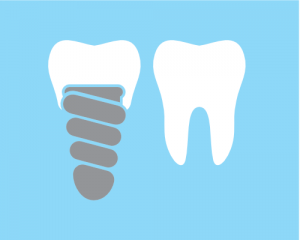
'dental implant and tooth'Dental implants are a safe and effective replacement for a missing tooth or teeth. The implant is placed in your jawbone and integrates with your natural bone. This implant then forms a stable, sturdy base for your new teeth.

What They Are

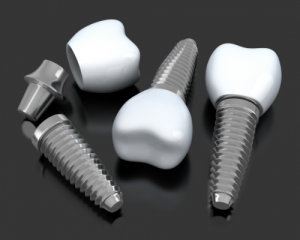
Implant: The implant itself is a rod that is screwed into the jawbone.

Abutment: This is the connection between the implant and the crown.

Crown: A tooth shaped cap that is attached to the abutment. It is the part of the tooth that is visible above the gum line.

What They’re Made Of

Titanium: Most implants are typically made of titanium, a biocompatible metal.

Zirconia: Often used for crowns and bridges and can be used as a metal-free option. Zirconia is biocompatible just like titanium.

Where They Go

Endosteal Implants: Placed in the jawbone. These implants are typically shaped like small screws, cylinders or plates, and they are the most commonly used.

Subperiosteal Implants: Placed under the gum, but on or above the jawbone. These implants are mostly for people with smaller jaws or shallow jawbones.

What Happens To Them

Osseointegration: Creates strength and durability by fusing directly to the bone and is bio-compatible. Bone cells attach themselves directly to the titanium/zirconium surface, essentially locking the implant into the jaw bone. Osseointegrated implants can then be used to support prosthetic tooth replacements of various designs and functionality. Anything from a single tooth, to all teeth in the upper and lower jaws. The teeth/crowns are usually made to match the enamel color of the existing teeth to create a natural appearance.

Bone augmentation: Some people do not have enough healthy bone to support dental implants, so bone must be built. Procedures can include bone-grafting which means adding bone to the jaw.

Talk to us today at Milwaukee Oral Surgery & Implants, Ltd to discuss your options with an implant specialist!